
Andreas Schleicher: Freedom, democracy and peace are the pillars of our societies
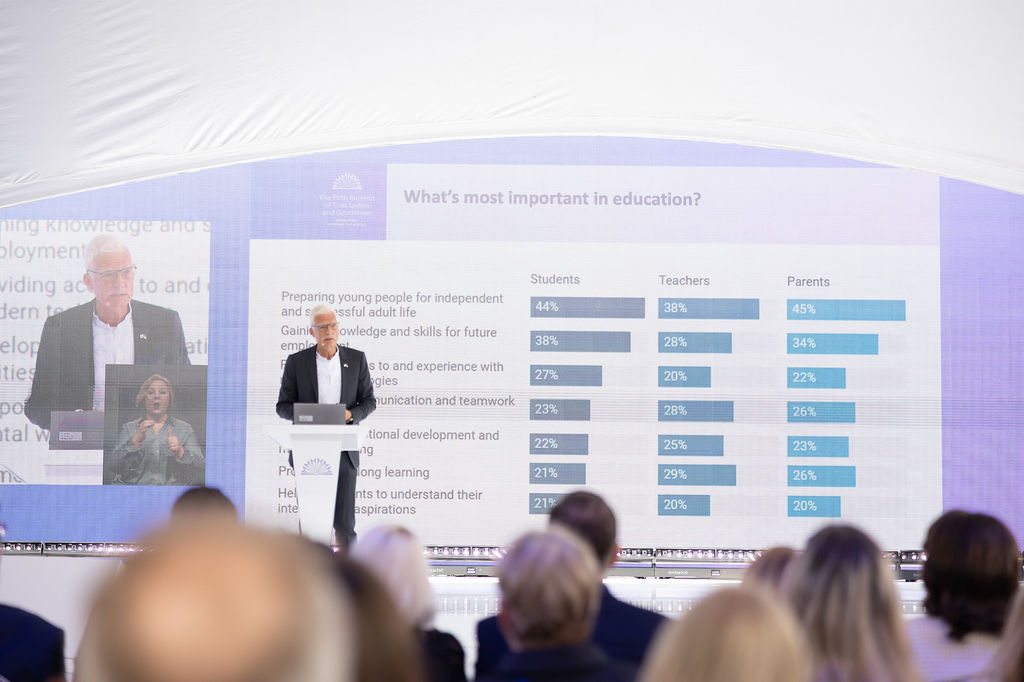
Andreas Schleicher, Director for Education and Skills at the Organisation for Economic Co-operation and Development (OECD), analysed in his column the findings of the international research ‘
Education as a Tool for Shaping Personal Resilience, National Social Capital, and a Culture of Peace’
, commissioned by the Summit of First Ladies and Gentlemen Global Platform. The survey was conducted in 14 countries among students, parents and teachers, and was presented at the Fifth Summit of First Ladies and Gentlemen (SFLG) held on 10–11 September in Kyiv under the theme
‘Education Shaping the World’.
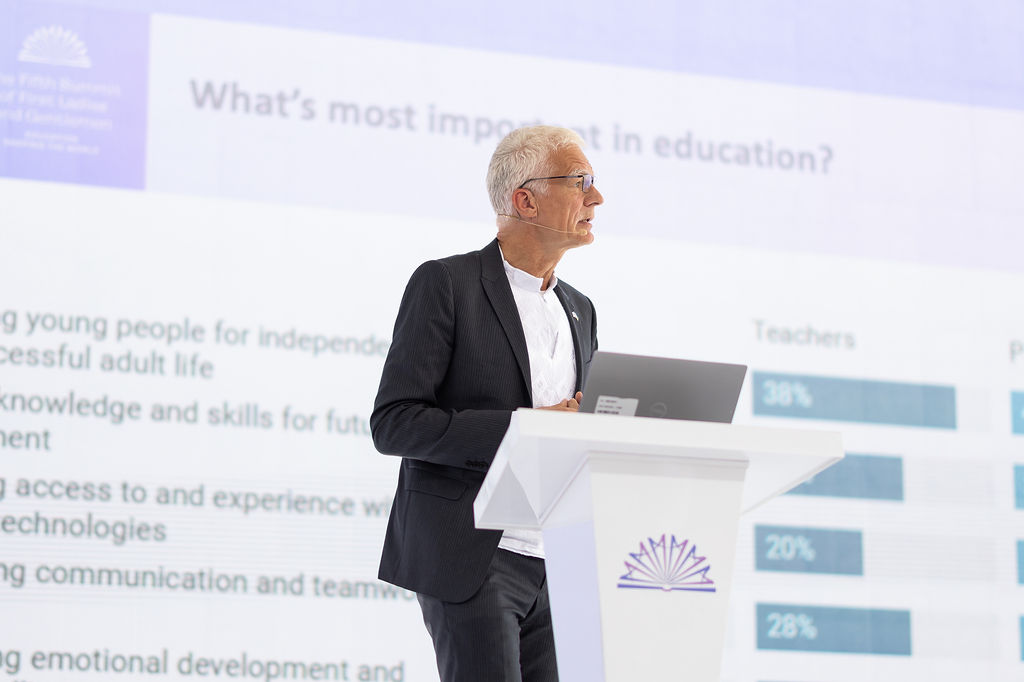
‘Freedom, democracy and peace are not diplomatic ornaments or beautiful words, they are the heart of education, and they are the pillars on which we build our societies. And if education doesn’t protect them with determination, the world’s tremors will wash away the very foundations of our societies,’ Mr Schleicher emphasised in his column.
He also highlighted that, according to the findings, eight out of ten teachers see education as the foundation for a democratic society and for peace. For students, one of the most important indicators is the feeling of safety at school, and across most countries, around 80% of surveyed students feel safe in their educational institutions. Andreas Schleicher noted that in Ukraine, the figure is close to 70%, despite thousands of Ukrainian schools being destroyed or damaged by Russian shelling. ‘It tells us that a sense of safety is not just about physical safety, it is very much about emotional safety and the quality of social relationships in school. All of this is tribute to the remarkable work that teachers do in Ukraine every day to give students a sense of safety, normalcy and emotional support in the middle of this war,’ he commented.
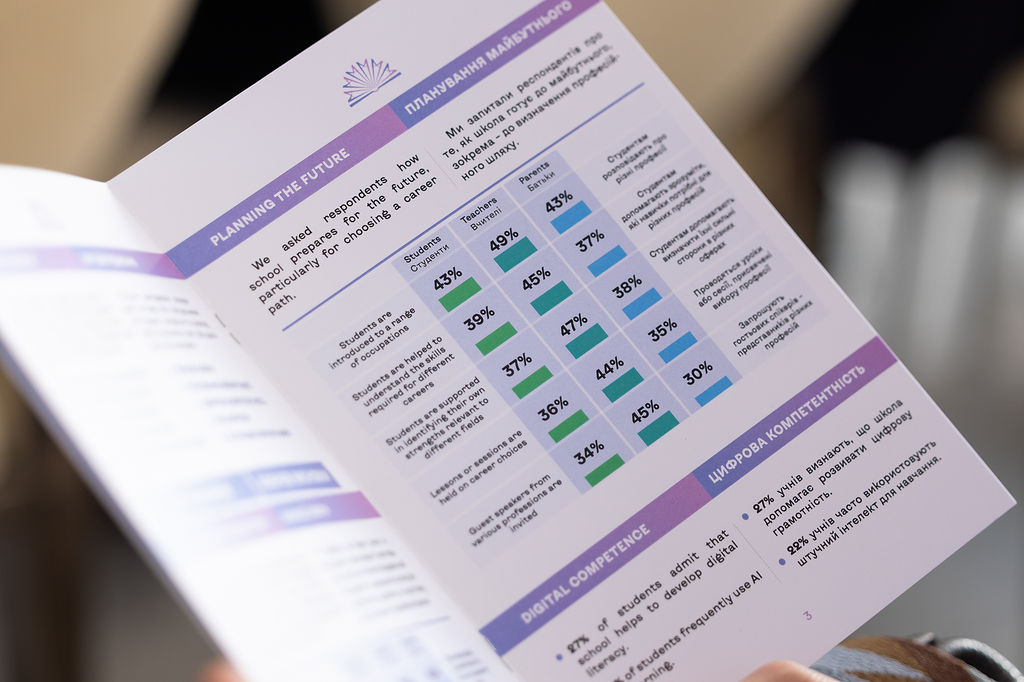
According to Andreas Schleicher, the quality of education depends on how teachers are valued and supported. He believes that remuneration is an important motivator but not the only factor that makes the profession attractive. He cited the example of Luxembourg, where teachers receive the best pay among European countries, and there is still a shortage of specialists, while in Finland, where salaries are comparatively low, each vacancy attracts ten applicants. ‘Money is an obvious extrinsic de-motivator, when salaries are inadequate then teachers quit, but money is rarely an intrinsic motivator for people working in education. What makes a job attractive is always a combination of the social status of the job, the contributions people feel they can make in the job, and the extent to which they feel their work is valued and supported,’ he noted. In Ukraine, only 3% of surveyed teachers believe they are fairly paid.
In addition, Andreas Schleicher underlined the growing impact of artificial intelligence on every sphere of human life. At the same time, he is convinced that good education must include authentic dialogue, mentorship, emotional connection, and an understanding of who students want to become and how to accompany them on their journey.
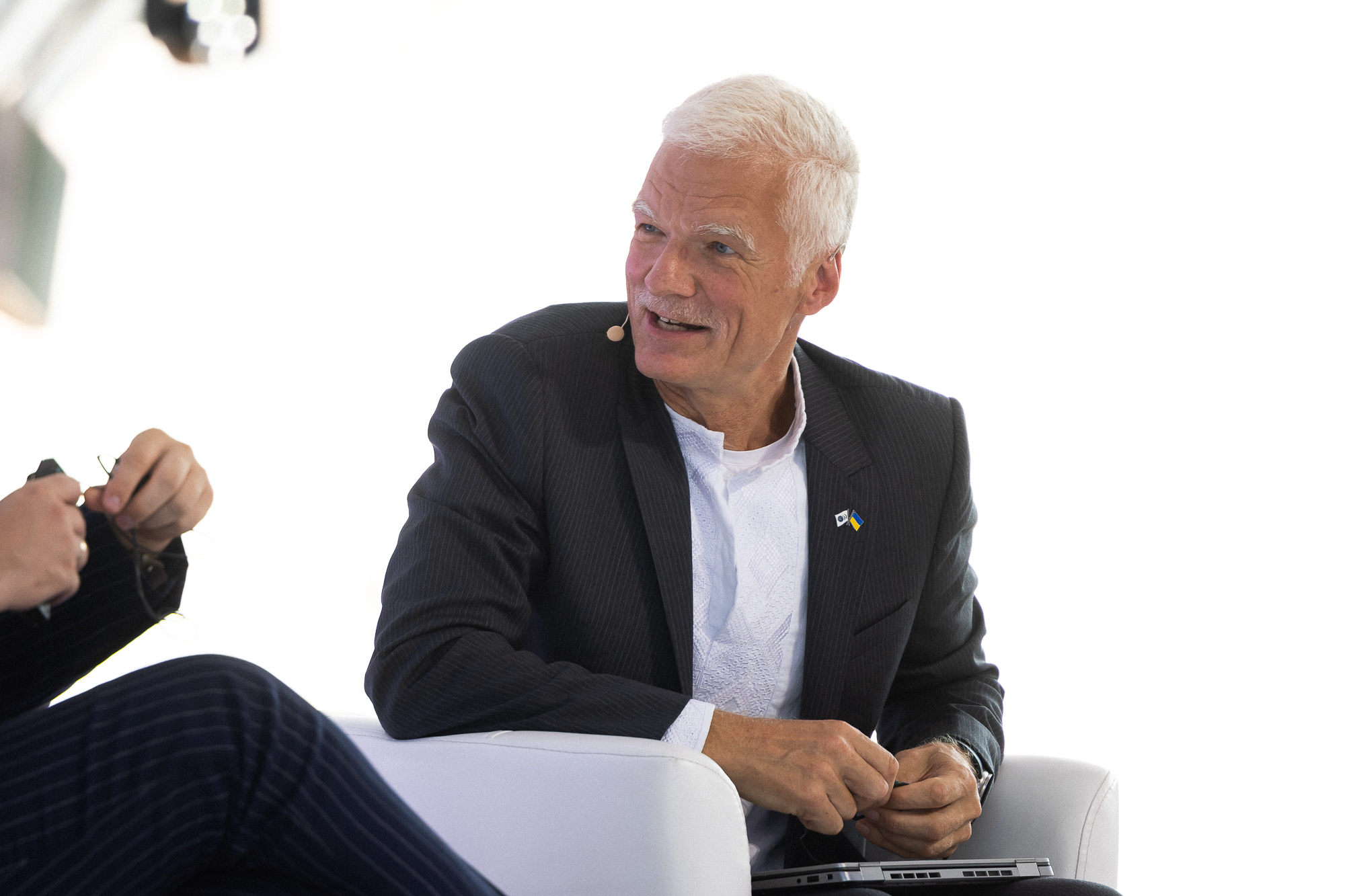
The SFLG Global Platform expresses gratitude to Andreas Schleicher, OECD Director for Education and Skills, for his long-standing cooperation and participation in the Summits of First Ladies and Gentlemen. Mr Schleicher has now attended the Summits for two consecutive years: this year, he presented the international component of the research and moderated a panel featuring Ministers of Education and Science from six countries.
Read Andreas Schleicher’s full column at this link and learn more about research on our website.
The research was designed and conducted by Centre for Social change and Behavioural economics in cooperation with Deloitte, with the contribution of OECD, within support from Education Cannot Wait and the support of the Ministry of Education and Science of Ukraine and Kyiv School of Economics.
Related articles
-
 First Lady of Serbia Tamara Vučić pays official visit to Africa to strengthen international relations
As part of her official visit, First Lady of Serbia Tamara Vučić visited the Democratic Republic of the Congo, the ...
-
 Olena Zelenska met with the First Gentleman Aleš Musar in Slovenia
On 18 November, Ukraine’s First Lady Olena Zelenska arrived in Slovenia on an official working visit and met ...
-
 Olena Zelenska: 75% of parents believe that children today face more threats than they did in their childhood
Almost every fourth child in the world has suffered directly from war. These are the findings of the study “Protect...
-
 The SFLG Global Platform Launches Public Diplomacy Education Initiative at Ukrainian Universities
The Summit of First Ladies and Gentlemen Global Platform has launched a lecture series titled “Public Diplomacy as ...
-
 Dr Lucrecia Peinado appointed President of ALMA
We warmly congratulate Dr Lucrecia Peinado, First Lady of Guatemala, on her new appointment as President of the All...
-
 First Lady of Lithuania Met with Ukrainian Healthcare Professionals
On February 27, the First Lady of Lithuania, Diana Nausėdienė, met at the Presidential Palace with a delegation of ...